 ultimate-guide
Comfrey Ointment Benefits: A Guide to Topical Use
Table of Contents
- Why Comfrey Ointment Deserves a Place in Your Topical Routine
- The Science Behind Comfrey: Active Constituents and Cell Regeneration
- Allantoin Benefits for Skin: Soothing, Softening, and Supporting Repair
- Comfrey Root Traditional Uses: From Battlefield Bones to Modern Salves
- How to Use Herbal Salves Topically: A Step-by-Step Guide
- What Published Research Says About Comfrey and Tissue Support
- Choosing a Quality Comfrey Ointment: What to Look For
- Safety, Precautions, and Who Should Avoid Comfrey
- Conclusion: A Traditional Botanical With Modern Relevance
- Frequently Asked Questions
Last Updated: October 2, 2026
Why Comfrey Ointment Deserves a Place in Your Topical Routine
Comfrey ointment is a topical preparation made from the root or leaf of Symphytum officinale, a hardy perennial plant long valued for its soothing effect on the skin.
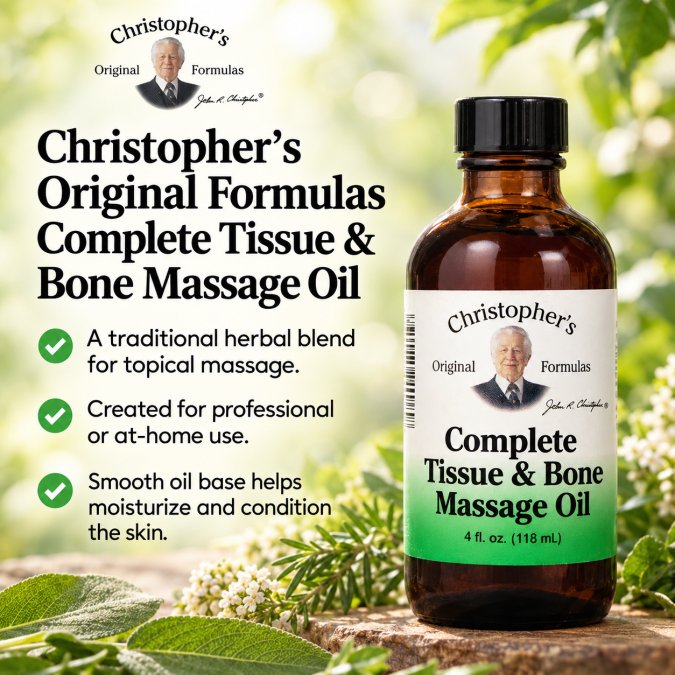
Complete Tissue and Bone Massage Oil, contains Comfrey as a primary ingredient!
The plant's reputation is not folklore alone. A 2023 review in Pharmaceuticals documented that comfrey extracts have been studied for their effects on tissue repair, with the compound allantoin identified as a key driver of that activity review of comfrey in Pharmaceuticals. That single compound, allantoin, is now found in countless commercial skin creams, which tells you something about how seriously formulators take it.
But here's what most guides get wrong: they either dismiss comfrey as old wives' tale or oversell it as a cure-all. Neither is accurate. The reality sits in the middle, and it's far more interesting.
Below, we'll walk through the active constituents that make comfrey worth understanding, the traditional uses that shaped its reputation, and a step-by-step method for applying herbal salves safely. We'll also cover what published research actually supports, and who should avoid this plant entirely.
If you're building a topical routine around natural ingredients, comfrey deserves a considered look, not blind faith.
The Science Behind Comfrey: Active Constituents and Cell Regeneration
The science behind comfrey rests on a small group of chemical compounds concentrated in the root and leaf. Researchers have isolated allantoin, rosmarinic acid, and various phenolic acids as the primary active constituents.
What makes comfrey unusual is the concentration of allantoin in its root, which is higher than in most plants studied for this purpose.
It is worth being precise here. "Cell regeneration" in a cosmetic or topical context does not mean regrowing tissue. It refers to the skin's normal process of shedding old cells and producing new ones.
The plant also contains pyrrolizidine alkaloids, or PAs, which are the reason safety guidance around comfrey exists at all. We'll address that in detail later, because it matters.
Allantoin: The Compound That Drives Skin Renewal
Comfrey root and leaf contain several constituents studied for their topical effects, including allantoin, rosmarinic acid, other phenolic compounds, and mucilage polysaccharides. Their concentrations vary with the plant material, growing conditions, harvest timing, and extraction method.
Allantoin is a nitrogenous compound found naturally in comfrey root and in several other plants. In topical formulations, it is classified as a skin-conditioning agent and is widely used for its softening and soothing properties.
Published research has examined allantoin's role in wound care and skin barrier support. A 2022 paper in Molecules reviewed allantoin's presence across plant species and noted its established use in dermatological preparations allantoin review in Molecules. The compound appears to support the skin's own exfoliation process, helping rough or dry areas shed more evenly.
For anyone building a topical routine, allantoin is the reason comfrey earns a place. It works gently, without the sting that stronger exfoliating acids can cause.
Rosmarinic Acid and Other Phenolic Compounds
Rosmarinic acid belongs to a broader family of phenolic compounds found in comfrey leaf and root. These compounds are studied for their antioxidant activity in topical applications.
The practical implication is straightforward. Antioxidants in a salve help protect the skin's surface from environmental stress while the carrier oils do their own work. Comfrey's phenolic content is one reason traditional salve makers favored it over plainer base oils.
The combination matters more than any single compound. Allantoin supports renewal, phenolics support protection, and the oil base supports the skin barrier. That trio is what makes a well-made comfrey salve more than the sum of its parts.
Allantoin Benefits for Skin: Soothing, Softening, and Supporting Repair
Allantoin benefits for skin come down to three practical effects: it soothes irritation, softens rough texture, and supports the skin's natural repair cycle. That combination is why the compound appears in so many over-the-counter skin preparations.
Soothing matters most for people dealing with dry, cracked, or chafed skin. Allantoin has a calming effect on the surface, which is why it turns up in creams designed for sensitive areas.
Softening is the second benefit, and it is the one most people notice first.
The third benefit, supporting repair, is where comfrey's reputation was built. Allantoin appears to encourage the skin's normal renewal process, which is why traditional users reached for comfrey preparations after minor skin damage.
Comfrey Root Traditional Uses: From Battlefield Bones to Modern Salves
Comfrey root traditional uses stretch back centuries across Europe and Asia, and the plant's common names tell the story better than any textbook.
The name "knitbone" comes from a folk belief that comfrey could help knit broken bones back together. The historical record is more specific than the nickname suggests.
Modern herbal practice does not make the bone-healing claim, and neither should anyone reading this.
What is not disputed is the plant's long-standing place in salve-making traditions. Comfrey root has been infused into oils and combined with beeswax for generations, producing a thick, protective balm used on dry and stressed skin.
That tradition is why you still find comfrey ointment on shelves today, and why it sits comfortably alongside modern topical ingredients rather than competing with them.
A Note on the Bone-Strengthening Tradition
The traditional claim that comfrey could strengthen or mend bones is part of the plant's history, not a modern medical claim, and it should be read that way. There are, however, numerous case studies and testimonials that provide enough anecdotal data for one to come to their own conclusions and discernment in it’s usage.
How to Use Herbal Salves Topically: A Step-by-Step Guide
Learning how to use herbal salves topically takes about five minutes to understand and a few applications to get comfortable with. The method is simple, but the details matter for both safety and results, especially with a comfrey preparation, where the plant's allantoin content and its pyrrolizidine alkaloids (PAs) both shape how the product should be handled.
Here is the process we recommend, in order.
Step 1: Wash and dry the area. Clean skin absorbs a salve more evenly.
Step 2: Take a small amount. A pea-sized portion covers roughly the area of your palm. Start smaller than you think you need; you can always add more.
Step 3: Warm it between your fingers. Salves are firm by design. Warming a small amount between clean fingertips makes it spread further and absorb faster.
Step 4: Apply in a thin layer. Massage gently in a circular motion until the salve disappears into the skin. Do not scrub or press hard.
Step 5: Leave it alone. Give the area 15 to 20 minutes before dressing or washing. This lets the oils settle into the skin barrier.
Step 6: Wash your hands afterward. This is not optional.
Patch Testing and Safe Application
Patch testing is the step most people skip, and it is the one that prevents unpleasant surprises. Even natural ingredients can trigger reactions in sensitive individuals.
Apply a small amount of the salve to the inside of your forearm. Wait 24 hours. If you see redness, itching, swelling, or any other reaction, do not use the product on larger areas. If the area stays calm, you are clear to proceed.
Repeat this test with any new jar or batch, even if you have used the same brand before. Formulations change, and so does your skin.
How Often to Apply and What to Expect
For general skin conditioning, twice daily is a reasonable starting point, typically morning and evening. For areas under repeated stress, such as hands or heels, an additional application midday can help. Most traditional and modern topical comfrey regimens described in the literature fall in the range of two to four applications per day over a period of several weeks (Staiger, 2012).
Expect the first noticeable change to be in texture. Dry, rough patches tend to soften within a week of consistent use. Comfort follows texture; skin that feels tight or irritated often settles as the barrier improves.
This is not an overnight product, and anyone promising instant results is overselling. Consistency over weeks is what produces the outcome people actually want.
For support and strengthening of other connective tissues, concerning recent injury or weakening due to labor or high-impact activities, I would recommend application to the site 2-4 times a day for 1-2 weeks depending on severity and how the recovery and healing process is progressing.
It is important to know that the FDA does not support internal consumption of Comfrey. Dr. Christopher’s Complete Tissue and Bone supplements do not contain comfrey, however, the herbal blend has been replaced with “lungwort,” which also contributes “Allantoin.”
Complete Tissue and Bone Capsule 180 Ct →
Why Dr. Christopher's Comfrey Ointment Fits This Method
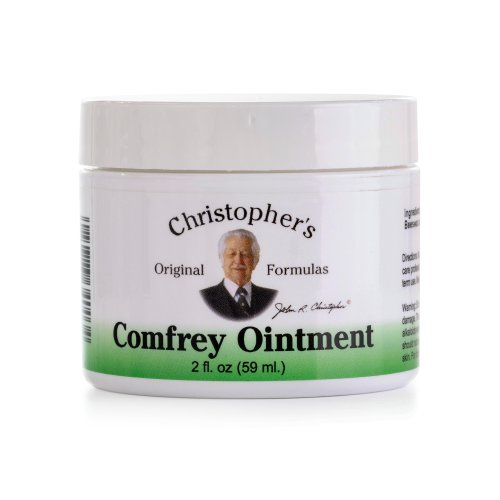
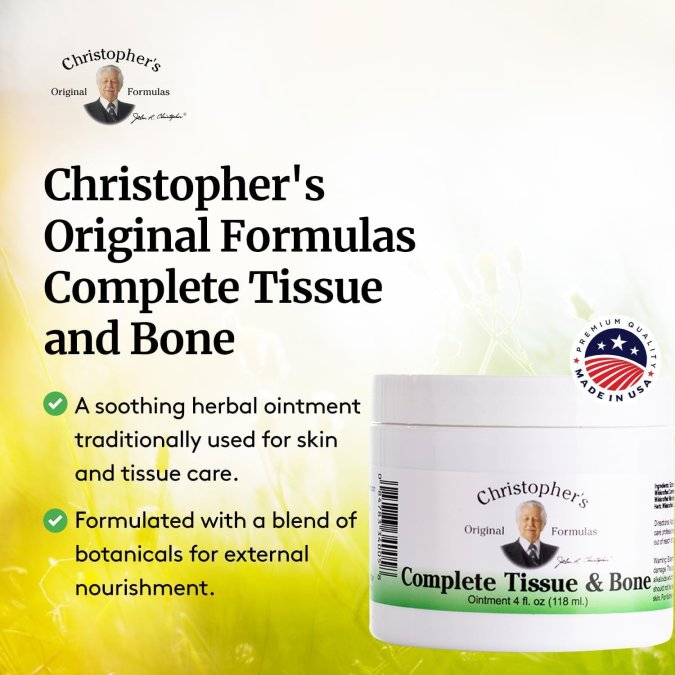
Dr. Christopher’s Comfrey Ointment is a simple, leaf-based preparation containing comfrey leaf, extra virgin olive oil, and beeswax. Complete Tissue & Bone Ointment, formerly known as Bone, Flesh & Cartilage or BF&C, contains comfrey root alongside white oak bark, mullein leaf, black walnut leaf, marshmallow root, gravel root, wormwood, lobelia, and skullcap, in a base of olive oil, wheat germ oil, and beeswax. The main difference is the plant part and formulation: Comfrey Ointment features comfrey leaf as its single herbal ingredient, while BF&C combines comfrey root with several other herbs.
If you are new to comfrey topicals, start with a single area, hands or heels are common starting points, and follow the patch test before expanding to other regions. That way you can observe how your skin responds before committing to a broader routine.
What Published Research Says About Comfrey and Tissue Support
Published research on comfrey has focused largely on two questions: what the plant's constituents do, and how the plant behaves when applied to skin. The evidence base is real, though narrower than marketing copy sometimes suggests.
A 2023 review published in Pharmaceuticals examined comfrey's traditional uses and modern applications, noting that the plant's allantoin and phenolic content has drawn continued research interest for skin support comfrey review in Pharmaceuticals. The review also flagged the presence of pyrrolizidine alkaloids as a factor requiring careful formulation.
A separate 2022 study in Molecules reviewed allantoin across plant sources and confirmed its established role in topical preparations designed for skin conditioning and barrier support allantoin research in Molecules.
Published clinical research supports certain topical comfrey extract preparations for short-term relief of pain and other symptoms associated with muscle and joint conditions, including acute back pain, sprains, and knee osteoarthritis. These findings apply to the specific preparations studied and do not automatically extend to every comfrey ointment. Evidence has not established that topical comfrey heals fractures, mends broken bones, or increases bone strength.
This distinction matters: relieving discomfort is different from demonstrating tissue repair. Comfrey’s traditional reputation as “knitbone” is part of its herbal history, while suspected fractures, significant injuries, and persistent symptoms require medical assessment and appropriate care.
Choosing a Quality Comfrey Ointment: What to Look For
Quality varies enormously in this category, and the label tells you more than the price tag does. Here is what to check before buying.
Root versus leaf. Comfrey root carries a higher concentration of allantoin than the leaf, which is why traditional salve makers favored it.
PA content. Some manufacturers use PA-free comfrey root extract, which removes the pyrrolizidine alkaloids while retaining other constituents.
Carrier oils and base. A good salve uses stable oils and beeswax rather than mineral oil or synthetic thickeners.
Ingredient transparency. A reputable maker lists every ingredient and states the plant part used. Vague labels like "herbal blend" tell you nothing useful.
At THEOS Wellness, our topicals collection is built around exactly this kind of transparency.
Safety, Precautions, and Who Should Avoid Comfrey
Comfrey contains pyrrolizidine alkaloids, and that single fact drives every safety recommendation around the plant. Understanding why removes the guesswork.
PAs are naturally occurring compounds found in comfrey and several other plants. When consumed orally in large amounts over long periods of time, they are associated with liver harm.
Topical use is a different matter. Applied to intact skin, comfrey's PA content is generally considered low risk by regulators, but that does not make precautions optional. It’s wise to consider what a proper amount topically per day is for long-term use, and for what purpose you are using it for.
It is recommended to avoid comfrey ointment:
- If you are pregnant or breastfeeding
- Children, unless advised by a healthcare professional
- People with known liver conditions
- Anyone taking medication that affects the liver
- Individuals with a known allergy to comfrey or related plants
For everyone else, the rules are simple. Use it on intact skin only. Do not apply it to open wounds.
Conclusion: A Traditional Botanical With Modern Relevance
Comfrey’s long history in herbal care offers a starting point for continued exploration. Clinical studies of specific topical extracts have found benefits for certain muscle and joint symptoms, while traditional accounts, case reports, and personal experiences raise further questions about its potential role in connective-tissue care. These sources provide different kinds of information: anecdotal improvements can suggest directions for research, but cannot establish whether comfrey caused the improvement or whether tissue repair occurred.
Future research could explore these observations through carefully documented case studies and controlled trials that assess function, tissue healing, formulation, and safety. Comfrey’s constituents—including allantoin and phenolic compounds—also offer opportunities to investigate how they interact and contribute to topical effects. This approach respects traditional experience while building a clearer understanding of what comfrey preparations may offer.
THEOS Wellness curates topicals, herbals, extracts, oils, and supplements from trusted brands, with educational detail on every product page so you can understand what you are applying and why.
Frequently Asked Questions
What are the primary active constituents in the comfrey plant?
Comfrey contains several notable compounds. Allantoin is the most studied, a substance that supports cell proliferation and tissue repair. Rosmarinic acid provides antioxidant activity. Other constituents include pyrrolizidine alkaloids (PAs), which are the reason internal use is restricted in many countries. Symphytum officinale also contains mucilage, tannins, and phenolic acids. When selecting a comfrey ointment, look for products that specify PA-free or low-PA root extracts for topical safety.
How does comfrey support skin and tissue health?
Published research points to allantoin as the key driver. Studies show allantoin promotes keratinocyte proliferation and supports the skin's natural renewal process. Rosmarinic acid contributes antioxidant support. A commonly cited randomized trial found that a comfrey root extract topical preparation supported comfort and mobility in participants with minor muscular complaints. These findings relate to topical application only; comfrey ointment is not intended for internal use or as a replacement for medical care.
What is the historical significance of comfrey in traditional herbalism?
Comfrey has been used for centuries in European herbal traditions. Its common names, knitbone and boneset, reflect its historical association with supporting recovery from fractures and soft-tissue injuries. Ancient Greek and Roman texts mention symphytum for wound care. Medieval herbalists applied comfrey poultices to bruises and sprains. This long history of topical use informs modern salve formulations, though traditional use does not constitute clinical proof of effectiveness.
Is comfrey ointment safe for topical application?
Comfrey ointment is generally considered safe for intact skin when used as directed and for short periods. The main concern involves pyrrolizidine alkaloids, which can be toxic if ingested or absorbed through broken skin in large amounts. Choose ointments made from PA-free root extract where available. Do not apply to open wounds, and avoid use during pregnancy or breastfeeding. Always patch test first and consult a qualified healthcare professional if you have concerns.
How does comfrey contribute to a natural wellness routine?
Comfrey ointment fits into a topical self-care routine focused on skin comfort and recovery support. Apply it after physical activity to areas of minor muscle or joint discomfort, or use it as part of an evening wind-down ritual for tired hands and feet. Pair it with other plant-based topicals for a layered approach. Keep expectations realistic: comfrey supports comfort and skin condition, it does not replace professional treatment for injuries or chronic conditions.
Starting a topical routine is easy. Sticking with one that actually fits your life is harder. THEOS Wellness simplifies that decision with a focused topicals collection, clear ingredient education, and products selected for quality rather than shelf space. Browse the topicals range, read the ingredient details on each product page, and build a routine you can maintain. Shop Now.