 listicle
Best Natural Muscle Recovery Topicals 2026: 5 Picks
Table of Contents
- Why Topical Muscle Recovery Support Is Having a Moment in 2026
- The Best Natural Muscle Recovery Topicals at a Glance
- Dragon Pain Relief Balm, Maximum Strength Jar: Best for Targeted Spot Relief
- Dragon Pain Relief Lotion Lineup: Best for Covering Larger Muscle Groups
- Hemp-Derived CBD Topical Benefits for Sore Muscles
- Natural Anti-Inflammatory Ingredients for Muscles: What the Evidence Says
- Herbal Oils and Magnesium: Brushing, Soaking, and Massage Options
- Post-Workout Recovery Best Practices: How to Apply Topicals for Results
- Safety, Skin Sensitivity, and Medication Interactions
- Conclusion: Matching the Right Topical to Your Recovery Routine
- Frequently Asked Questions
Last Updated: October 3, 2026
Why Topical Muscle Recovery Support Is Having a Moment in 2026
Delayed onset muscle soreness is the ache that shows up a day or two after hard effort, and it has quietly turned muscle recovery topicals into one of the fastest-growing corners of natural wellness. This guide answers that with an honest look at ingredients, application, and safety.
Here is the throughline most roundups miss. The best natural muscle recovery topicals 2026 has to offer are not the ones with the longest ingredient list. They are the ones built around a clear mechanism, a sensible delivery format, and a transparent label.
Below, we break down five picks from our Topicals collection, explain how each one earns its spot, and show you exactly how to apply them for post-workout recovery.
The Best Natural Muscle Recovery Topicals at a Glance
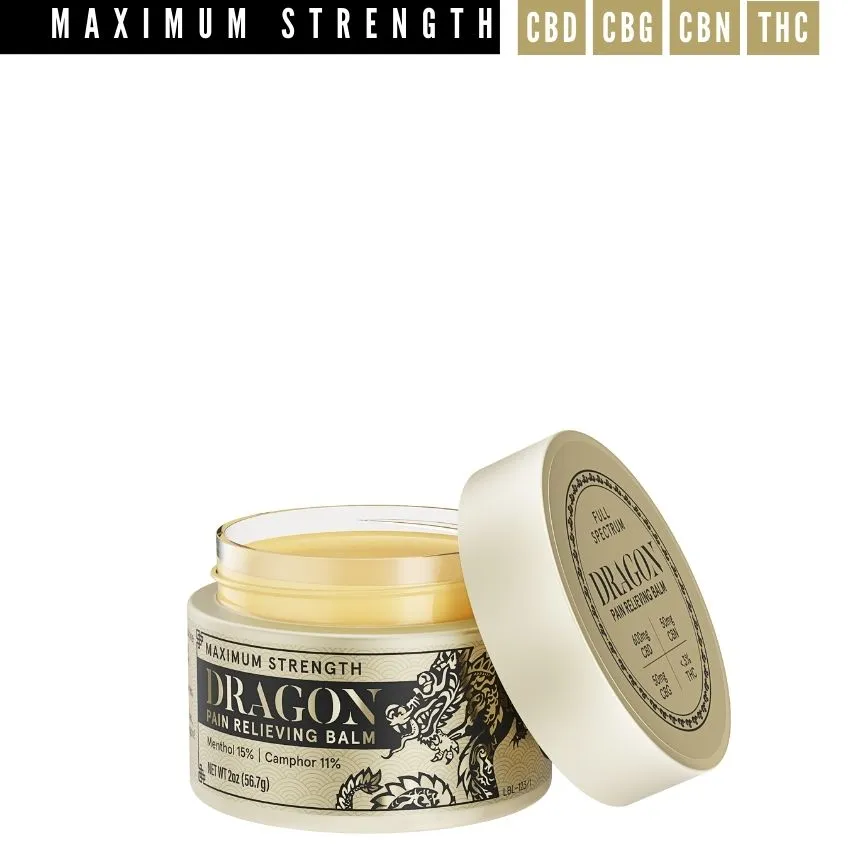
The Dragon Pain Relief Balm, Maximum Strength Jar is a strong pick for targeted relief, with its concentrated 15% menthol and 11% camphor formula. For larger areas, a Dragon lotion covers more ground with less product.
| Product | Format | Menthol / Camphor | Best For |
|---|---|---|---|
| Dragon Pain Relief Balm, Maximum Strength Jar | 2 oz jar | 15% / 11% | Pinpoint spots, knots, trigger points |
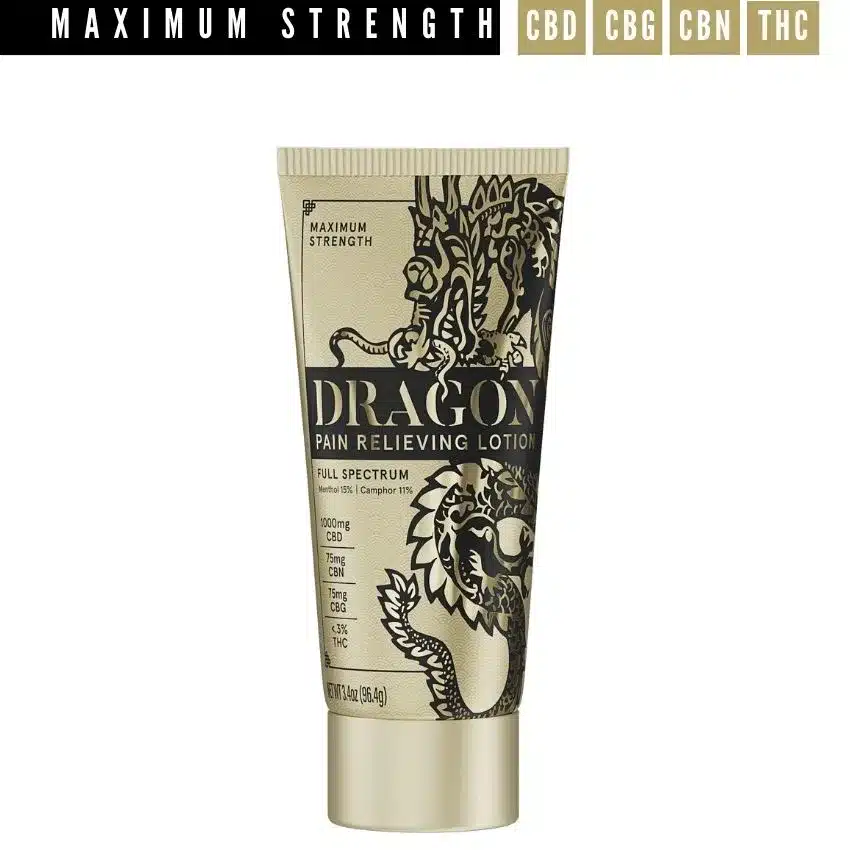
| Dragon Pain Relief Lotion, Maximum Strength | 3.4 oz lotion | 15% / 11% | Large muscle groups, post-session coverage |
| Dragon Pain Relief Lotion, Super Strength Terpene Blend | 3.4 oz lotion | 13% / 11% | Hemp-free routines, high-strength coverage |
| Dragon Pain Relieving Lotion, Extra Strength | 3.4 oz lotion | 11% / 10% | Massage glide, broad-spectrum support |
| Dragon Pain Relieving Lotion, Regular Strength | 3.4 oz lotion | 5.3% / 3.1% | Sensitive skin, first-time users |
How We Evaluated These Topicals
We judged each pick on four things: the active cooling and warming agents and their concentrations, the delivery format, how the formula is built for absorption, and how transparent the label is about what is inside.
We did not rank on marketing claims. A topical earns its place here only if we can point to what is doing the work and why it belongs in a recovery protocol.
Dragon Pain Relief Balm, Maximum Strength Jar: Best for Targeted Spot Relief
Its 2 oz jar holds a concentrated formula with 15% menthol and 11% camphor, plus a full spectrum hemp base carrying 600 mg CBD, 50 mg CBN, and 50 mg CBG.
That combination delivers cooling-then-warming sensations. Menthol triggers the cooling signal; camphor brings the warming effect that follows. Together they create the counter-irritant response that makes a topical feel like it is working on the spot.
The jar format is the practical advantage. You scoop a small amount and work it into a knot, a calf, or the base of the neck without spreading product over skin you did not mean to treat.
Dragon Pain Relief Lotion Lineup: Best for Covering Larger Muscle Groups
The Maximum Strength lotion carries the same 15% menthol and 11% camphor as the balm, but in a 3.4 oz creamy base with 1,000 mg CBD, 75 mg CBN, and 75 mg CBG. That texture glides across a full quad or back and adds moisture without a greasy finish.
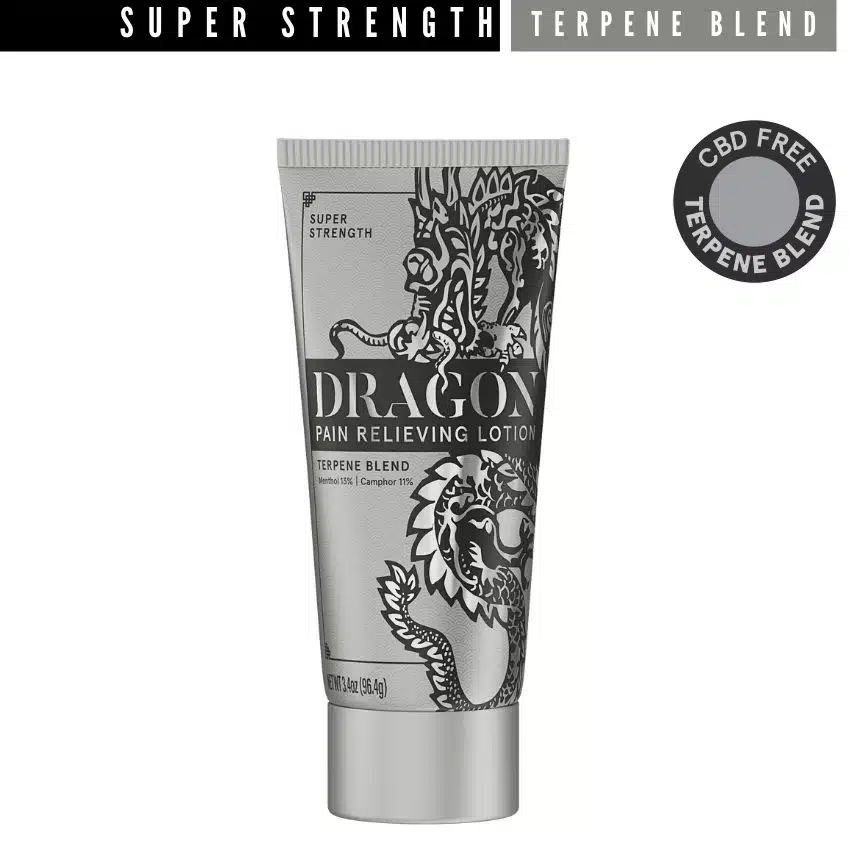
The Super Strength Terpene Blend is the hemp-free option. It pairs 13% menthol with 11% camphor and a 7-terpene blend, so you get the cooling and warming effect without cannabinoids.
Extra Strength sits in the middle with 11% menthol and 10% camphor, built with aloe, shea butter, and botanicals for massage glide. Regular Strength drops to 5.3% menthol and 3.1% camphor, a sensible starting point if your skin runs sensitive.
Hemp-Derived CBD Topical Benefits for Sore Muscles
Hemp-derived CBD topical benefits come from applying cannabinoids directly to the skin rather than swallowing them. The skin barrier limits how much crosses into the bloodstream, so a topical is used for local comfort rather than whole-body effects.
Hemp-derived means the cannabinoids come from the hemp plant, not from marijuana. Our Dragon formulas are hemp-derived and contain less than 0.3% THC, which keeps them within regulated hemp levels. That trace amount is not enough to cause altered awareness or a "high." These are topical products for muscles and joints, not recreational products, and they should not be confused with them.
Understanding Hemp vs Marijuana Topicals
The difference between hemp and marijuana topicals is legal and botanical. Both plants belong to the same species, but hemp is defined by its low THC content, while marijuana carries higher concentrations.
A hemp-derived topical with under 0.3% THC is formulated for skin-level comfort. If you want to avoid cannabinoids entirely, the Super Strength Terpene Blend is the CBD-free option in the Dragon lineup.
Natural Anti-Inflammatory Ingredients for Muscles: What the Evidence Says
The natural anti-inflammatory ingredients for muscles that appear most often in recovery topicals are menthol, camphor, arnica, and magnesium, and each works through a different mechanism.
Menthol activates the TRPM8 cold-sensing receptor in the skin, producing a cooling signal that travels along the same nerve pathways as pain and effectively competes with it. This is why menthol feels like relief even though it is not reducing tissue damage. Camphor activates TRPV1 and TRPV3 warmth-sensing channels, which is why the warming sensation follows the cooling one. Together they produce the counter-irritant response that defines most menthol-camphor topicals, including every Dragon formula in our Topicals collection (Pergolizzi et al., 2018).
Arnica (Arnica montana) has the longest topical tradition of any botanical on this list. Its sesquiterpene lactones, particularly helenalin, are the compounds most studied for topical use on tired, stiff, overworked areas. A systematic review of topical arnica for musculoskeletal complaints found consistent use in traditional practice but noted that trial quality varies widely, so arnica is best understood as a well-tolerated botanical with promising but not definitive evidence (Ernst, 2016).
Magnesium is used topically in massage oils and bath soaks rather than in balms, because the magnesium chloride brine format is what carries it. The proposed mechanism is transdermal absorption supporting local muscle relaxation, though the evidence for how much magnesium actually crosses the skin barrier remains an open question in the literature (Gröber et al., 2017).
Why Ingredient Synergy Matters More Than Any Single Ingredient
A topical is not a list of ingredients, it is a system, and the ingredients interact.
- Menthol + camphor work because they target opposite thermal receptors. Using one without the other may reduce the counter-irritant effect. The Dragon Maximum Strength formulas pair 15% menthol with 11% camphor specifically to hit both pathways.
- Menthol + arnica work because menthol handles the immediate sensory distraction while arnica addresses the botanical side of the formula.
- Camphor + magnesium work in sequence rather than together: camphor in a balm for the acute post-session window, magnesium in a soak for the wind-down hours later. They are not competitors; they are different time slots in the same routine.
- CBD + CBN + CBG in the Dragon hemp-derived formulas are included as a cannabinoid trio rather than CBD alone. CBN and CBG are minor cannabinoids that appear alongside CBD in full-spectrum hemp extract, and the rationale for including them is that full-spectrum extracts preserve the plant's native compound profile rather than isolating one molecule (VanDolah et al., 2019).
How to Read an "Anti-Inflammatory" Label Honestly
We want to be careful about the word "anti-inflammatory" here. A topical is not the same as an oral anti-inflammatory, and the evidence for botanical ingredients varies by plant, by preparation, and by concentration. Menthol and camphor have the clearest mechanism-level rationale because their receptor targets are well characterized. Arnica and magnesium have meaningful traditional and emerging evidence but should not be described as equivalent to pharmaceutical anti-inflammatories.
For readers who want to go deeper on how botanical extracts are prepared and standardized, which matters enormously for whether a label's claims hold up, the American Botanical Council's herbal education resources is a useful reference. The National Center for Complementary and Integrative Health overview of herbal products is a fair starting point for understanding what is and is not established for specific botanicals.
References
Ernst, E. (2016). Arnica montana for musculoskeletal complaints: A systematic review. Focus on Alternative and Complementary Therapies, 21(2), 79-84.
Gröber, U., Werner, T., Vormann, J., & Kisters, K. (2017). Myth or reality, Transdermal magnesium? Nutrients, 9(8), 813.
Pergolizzi, J. V., Taylor, R., LeQuang, J. A., & Raffa, R. B. (2018). The role and mechanism of action of menthol in topical analgesic products. Journal of Clinical Pharmacy and Therapeutics, 43(3), 313-319.
Dragon Pain Relief Balm, Maximum Strength Jar, 2 oz - Full Spectrum Formula →
VanDolah, H. J., Bauer, B. A., & Mauck, K. F. (2019). Clinicians' guide to cannabidiol and hemp oils. Mayo Clinic Proceedings, 94(9), 1840-1851.
Herbal Oils and Magnesium: Brushing, Soaking, and Massage Options
Not every recovery tool is a balm. Oils and magnesium products suit different moments in the routine, and they pair well with the lotions above.
Herb Pharm Arnica Oil is a simple, plant-forward option: certified-organic arnica flowers infused into cold-pressed olive oil. It gives enough glide for focused massage into areas that feel tired or overworked.
Life-flo Pure Magnesium Oil is a magnesium chloride brine with no added ingredients, providing 560 mg of elemental magnesium per teaspoon. Add it to a bath or foot soak, or use it as part of a massage routine.
Recover Essential Oil is a concentrated blend built around an adult post-activity massage preparation, with wintergreen, peppermint, helichrysum, and chamomile among its components. It must be diluted before skin contact.
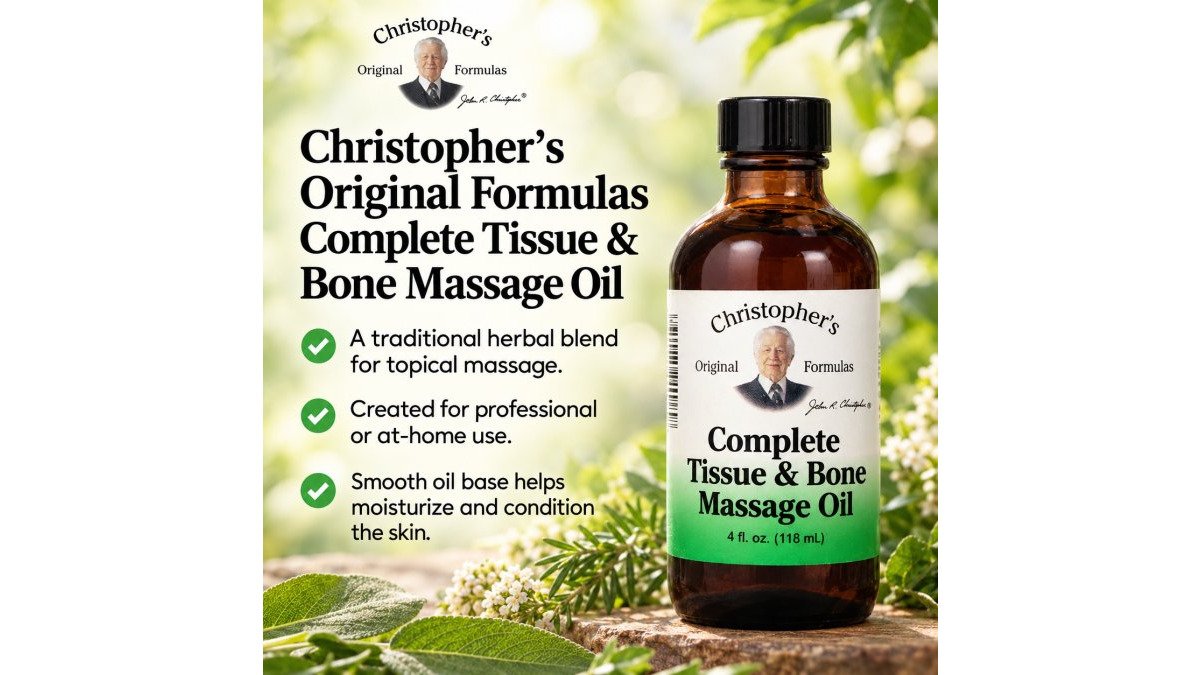
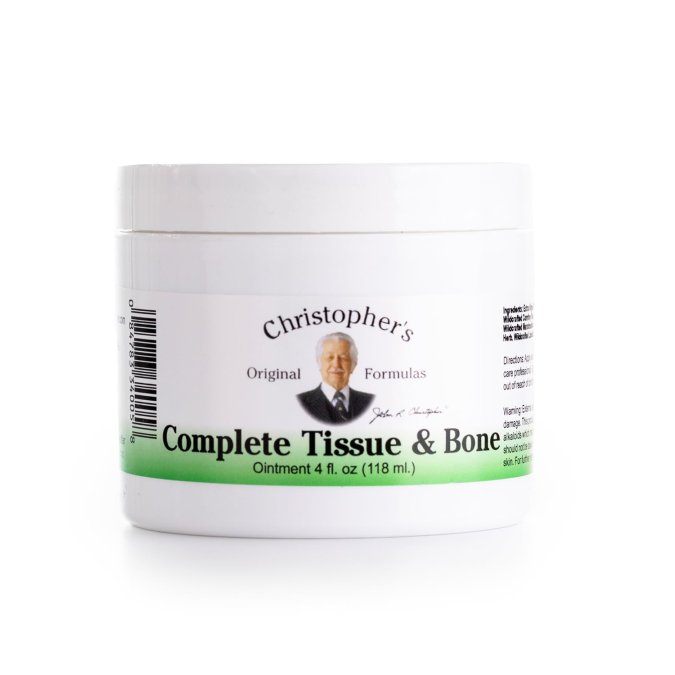
Complete Tissue & Bone Ointment takes a different route, using herbs traditionally valued for soothing properties, including mullein and wormwood, in a synthetic-additive-free base.
Post-Workout Recovery Best Practices: How to Apply Topicals for Results
Post-workout recovery best practices start with timing: apply a topical after you have cooled down and showered, not mid-session. Clean, dry skin absorbs a topical more evenly and reduces the chance of irritation. But timing is only the first variable. The technique you use, and the technique changes by muscle group, is what most guides leave out, and it is where a topical either earns its place or gets wasted.
The General Sequence
- Cool down for 5 to 10 minutes so your heart rate settles.
- Shower and dry the area you plan to treat.
- Apply a small amount and work it in for 30 to 60 seconds.
- Wash your hands immediately afterward.
- Reapply no more than the label allows, typically up to three to four times daily.
That sequence is the baseline. What follows is how to adapt it to the muscle groups that actually get sore.
Application Technique by Muscle Group
Calves and forearms (small, dense muscle bellies). These respond best to the balm format. Warm a pea-sized amount between your fingertips, then use small circular pressure, roughly the width of a coin, working from the bottom of the muscle toward the top. The goal is to move the product into the tissue, not to spread it across the skin. Thirty to sixty seconds per area is enough.
Quadriceps and hamstrings (large, broad muscle groups). These are lotion territory. Apply a thin line down the length of the muscle, then use long, flat strokes with the palm and heel of your hand, always working toward the heart. This direction supports venous return and matches the way most massage practitioners approach a post-session leg. The Maximum Strength lotion's glide is built for exactly this, enough slip to cover a full quad without re-applying.
Back and shoulders (broad, hard-to-reach areas). Use a lotion and a partner if possible. Work in long strokes parallel to the spine, not across it, and keep pressure light over the shoulder blades where the tissue is thin. For a specific knot near the shoulder blade, switch to the balm and use sustained circular pressure for 20 to 30 seconds rather than quick rubbing.
Neck and upper traps (thin tissue, high sensitivity). Use the smallest amount of balm, apply with two fingers, and stop short of the throat and the front of the neck entirely.
Joints (knees, elbows, ankles). Use a lighter touch than you would on muscle, and avoid broken or irritated skin completely. A lotion applied with a flat palm and gentle circular motion is preferable to a balm here, because the goal is coverage rather than deep pressure.
Pairing Topicals With Myofascial Release
A topical works better when it is applied as part of a myofascial release routine rather than in isolation.
The simplest version is a foam roller or lacrosse ball used before the topical, not after. Roll the target area for 60 to 90 seconds to increase local blood flow and loosen the tissue, then apply the topical to the same area. The reasoning is that a topical acts on the skin and the tissue just beneath it, so tissue that has already been warmed and mobilized may provide a better surface for the product to work with.
For trigger points specifically, the tight, tender spots that refer discomfort elsewhere, the sequence is different. Apply the balm first, wait 60 seconds for the cooling and warming response to develop, then use sustained thumb or ball pressure on the point for 30 to 45 seconds. The sensory effect of the menthol and camphor may make the pressure more tolerable, potentially allowing you to hold it longer.
When in the Day to Apply
- Immediately post-session (within 30 minutes): the acute window, when cooling and warming sensations are most useful for comfort.
- Evening, 2 to 4 hours later: a second application if the label allows, often paired with a magnesium soak for the wind-down.
- Next morning: the DOMS window, when soreness typically peaks. A lotion across the full muscle group is usually more useful here than a balm on a single spot.
The American College of Sports Medicine guidance on recovery supports active recovery, hydration, and sleep as the foundation of post-exercise recovery, with topicals as a comfort layer on top. Application technique is what determines whether that layer does its job.
Safety, Skin Sensitivity, and Medication Interactions
Safety comes down to three habits: patch test, respect the label, and check with a clinician if you take medication or manage a health condition. Menthol and camphor are strong sensations, and more is not better.
- Patch test on your inner forearm 24 hours before first full use.
- Never apply to broken, irritated, or sunburned skin.
- Keep topicals away from eyes, mucous membranes, and other sensitive areas.
- Wash hands after every application, especially before touching your face.
- Do not use heating pads or wraps over a menthol or camphor topical.
- If you are pregnant, nursing, or on blood-thinning medication, ask your clinician first.
The FDA consumer information on topical pain relievers notes that topical analgesics with menthol and camphor are for temporary relief and should not be used on wounds. If a reaction develops, stop use and seek advice.
Conclusion: Matching the Right Topical to Your Recovery Routine
Soreness after effort is normal, and the right topical makes the days after a hard session more comfortable without reaching for a pill. The trick is matching format to muscle group: a jar for a knot, a lotion for a whole leg, an oil or magnesium soak for the wind-down.
At THEOS Wellness, we curate every topical in our collection from trusted brands, with the ingredient detail and safety context you need to choose well. Our Topicals range covers targeted balms, broad-coverage lotions, arnica oil, magnesium, and essential oil blends, all in one place. Shop Now and build a recovery routine that fits how you actually train.
Frequently Asked Questions
What should I look for in a natural muscle recovery balm?
Start with the active ingredients and their percentages. Menthol and camphor are the classic cooling and warming pair, and higher concentrations (like 15% menthol and 11% camphor) produce a stronger sensation. Check whether the base is a balm, lotion, or oil, since balms suit small targeted areas and lotions cover larger muscle groups. If you want hemp-derived cannabinoids, look for a stated milligram amount per container. Finally, confirm the product is intended for topical use only and lists its full ingredient panel.
What are the benefits of hemp-derived topicals for muscle recovery?
Hemp-derived CBD topical benefits center on localized use: you apply the product directly to the area that feels tight or overworked, so the cannabinoids and terpenes stay where you put them rather than circulating through your whole body. Many formulas pair CBD with menthol, camphor, or botanical extracts so the cooling and warming sensation does the immediate work while the hemp base supports the overall experience. Absorption varies by formula, which is why some products use nano-emulsification to help ingredients cross the skin barrier more evenly.
Is there a difference between hemp-derived CBD topicals and recreational cannabis products?
Yes, and the distinction matters. Hemp-derived topicals are made from hemp, which by regulation contains less than 0.3% THC. Even the strongest Dragon Gold blend stays under that threshold, so it does not cause altered awareness. Recreational cannabis products, by contrast, are built around much higher THC levels and are intended for psychoactive effects. Understanding hemp vs marijuana topicals comes down to this: hemp topicals are formulated for localized skin application, not intoxication, and the THC content is legally capped.
Are hemp-derived topicals legal and safe for daily use?
Hemp-derived topicals with less than 0.3% THC fall within regulated hemp limits, which is why they are widely sold and used daily. For safety, apply only to intact skin, avoid broken or irritated areas, and wash your hands after use. Menthol and camphor can feel intense, so test a small patch first. If you are pregnant, nursing, managing a chronic condition, or taking prescription medication, check with your healthcare provider before adding any new topical to your routine.
How do natural ingredients like menthol and camphor support muscle comfort?
Menthol triggers a cooling sensation by interacting with cold-sensing receptors in the skin, while camphor produces a warming effect and supports vasodilation, the widening of blood vessels near the surface. Together they create the familiar hot-cold contrast that temporarily relieves aches in muscles and joints. This is a sensory and circulatory effect, not a structural repair of muscle tissue. Pairing these actives with massage, gentle movement, and adequate hydration supports the broader post-workout recovery process.